
Who mediates when the mediator gets bombed?
The Middle East is at war again. The country that spent fifty years keeping back-channels open just got caught in the crossfire.

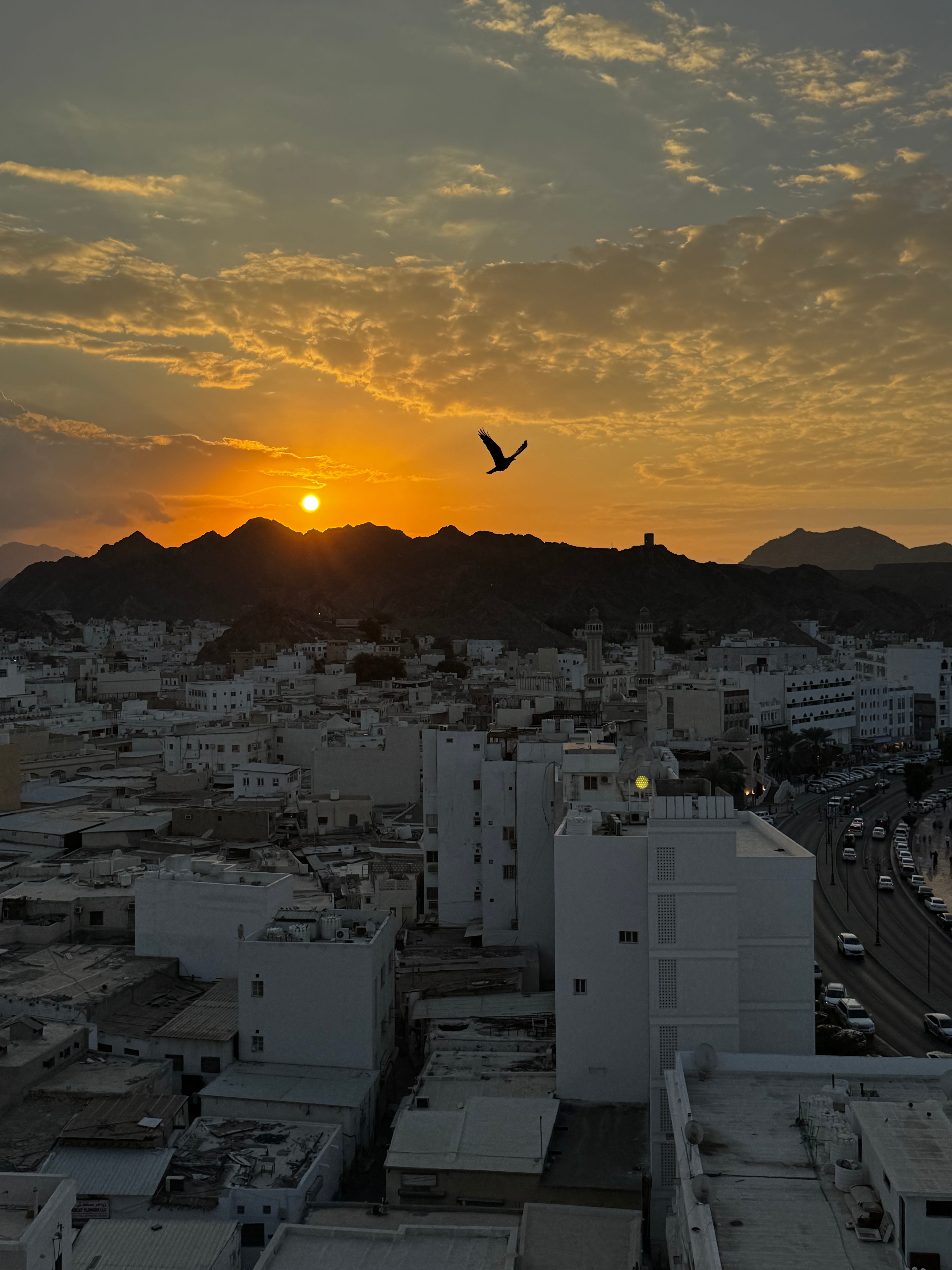
Most of you know I grew up in Oman. My family moved to Muscat in 2001, a few months before September 11. I was six then. I’ve written about this before, and I won’t rehash it, except to say that when you spend twelve years somewhere as a child, the place doesn’t stay foreign to you. And when you see it on a news ticker getting hit by drones, the reaction can’t just be analytical. It’s personal.
So here’s what happened. For months, Oman had been mediating between the US and Iran. Since 2025, there were rounds in Muscat, one in Rome, and the latest at the residence of Oman’s ambassador to the UN in Geneva on February 26th.
On Friday the 27th, Oman’s foreign minister Badr al-Busaidi even gave an interview on CBS saying that a deal was within reach. By Omani standards this was the equivalent of putting up a billboard in Times Square. The Omanis don’t do public; something that even Trita Parsi of the Quincy Institute called “quite unprecedented.” But Albusaidi looked at the camera and told the American public that Iran had agreed to zero stockpiling of enriched uranium and full IAEA verification. “A peace deal is within our reach,” he said, “if we just allow diplomacy the space it needs to get there.”
Parsi’s read was that Albusaidi went public so that Americans would know how close peace had been, before what came next came next. But on Saturday, the US and Israel struck Iran and Khamenei — as well as much of the senior military leadership — were killed.
Then Iran hit back. Missiles and drones flew across the Gulf, aimed at US bases, but landing on a lot more than that. Bahrain. Kuwait. Qatar. Saudi Arabia. The UAE. Jordan. The Crown Plaza hotel in Manama. Airports in Dubai and Abu Dhabi. Ras Laffan in Qatar. The Qataris shot down two Iranian fighter jets that had entered their airspace heading towards Doha.
But what was even more surprising was that Oman got hit too. Duqm Port, on the Arabian Sea, took two drones on March 1st. An oil tanker was attacked off Muscat, killing a crew member. Another was hit near Khasab in the Musandam peninsula, injuring four. And then on Tuesday, Duqm’s fuel tanks were struck again.
Iran’s explanation was a study in institutional embarrassment. The General Staff said it hadn’t ordered strikes on Omani territory. Abbas Araghchi, the foreign minister, called it the work of military units acting on general instructions. Oman was a “friend and neighbour,” they insisted. I suppose the drones weren’t briefed.
But Albusaidi called Araghchi anyway. On the call, Araghchi said Tehran was open to de-escalation and Albusaidi relayed the message to the international community.
I should explain why Oman was the one carrying these messages.
If you’ve never been to Oman, picture the one person at a dinner party who somehow keeps their composure while everyone else gets progressively louder and angrier with each other. Nobody quite notices them until two guests who aren’t speaking need someone to go say something on their behalf. That’s Oman. I won’t call it passivity — I’ve watched Omanis bargain in the Muttrah souq and they are not passive people — but it’s a kind of institutional patience that extends all the way up.
Part of it is religious. Most Omanis are Ibadhi, a school of Islam that predates and sits outside the Sunni-Shia divide. This frees Muscat from the sectarian logic that has consumed so much of the region. Its constitution explicitly prohibits religious discrimination and geography also reinforces the instinct: a maritime border with Iran across the Strait of Hormuz to the north, a land border with Yemen to the south, and oil reserves small enough that the country needs its neighbours to be stable in a way that Abu Dhabi, say, can afford to care about slightly less.
But mostly it’s accumulated practice. Oman has been doing this for decades, and each time it chose not to take a side, it paid a price for the choice, and then was proved right later when the people who had been angry with it needed a back-channel.
Take Yemen. When the Saudi-led coalition launched its intervention in 2015, every GCC state joined except Oman. Muscat said no, opened its borders to Yemenis locked out by the blockade, and started hosting Houthi delegations. A friend asked me at the time whether this “talking to everyone, committing to no one” was just convenient. I didn’t have a great answer then, but ten years later, when Washington needed someone to broker a truce with the Houthis to stop attacks on Red Sea shipping, Oman was the only country in the room that both sides would talk to. That’s not convenience. That’s the payoff for a decade of absorbing grief from allies who’d wanted it to take sides.
Even during the Iran-Iraq war, Oman kept quiet channels open between the US and Iran. When Obama needed somewhere to run the secret talks that became the 2015 nuclear deal, it was Muscat. When the Saudis and Iranians needed to start speaking again in 2021, it was Muscat again. The China-brokered Saudi-Iran deal that everyone credits to Beijing? Oman hosted the early rounds that made it possible.
There’s more. Not joining the Qatar blockade in 2017 cost Muscat goodwill with Riyadh and Abu Dhabi. Refusing the Abraham Accords — on the grounds that normalisation without Palestinian statehood was premature — has annoyed Washington for years. Each of these decisions was strategic and the balance has always been that when a crisis comes and nobody trusts anybody, they trust Oman. And the reason they trust Oman is that Oman never belonged to any of them.
What happened last weekend tests that arrangement in a way nothing else has.
Qatar cut communication with Tehran after being hit. Al-Ansari said they hadn’t “resumed communication with the Iranians since their attacks on our sovereignty.” Fair enough. If someone fires cruise missiles at your airport, the phone call can wait.
But Oman, which was also hit, took the call. Albusaidi listened to Araghchi say Iran wanted peace, then told the world.
The country whose messages you’ve been carrying for months sends drones into your port, and you pick up when they ring. From the outside it looks absurd. From inside the logic of what Oman has always done, it would have been stranger not to answer.
This is what I can’t stop thinking about. Not just the strikes on Oman, which are bad enough, but what it means if the function Oman performs gets broken. Every de-escalation in this region that I can think of, going back decades, had an Omani hand in it somewhere.
Oman made a bet a long time ago that being useful to everyone was worth more than being aligned to any particular side, and has spent fifty years paying the costs of that bet, and the bet kept paying off. Until, maybe, now.
If Oman stops being able to do this — if the accumulated strikes and the Hormuz closure and the sheer frustration of being in the middle of a shooting war grinds it down — then the next time Iran and America need to talk without admitting they’re talking, where do they go? Who carries the message?
I don’t have an answer to it. Albusaidi says the off-ramps are still there. I hope the powers that be take it.
I loved how you showed that neutrality isn’t the absence of action but a long, deliberate choice that requires endurance most countries simply don’t have.
It’s a good informative piece, especially for people unfamiliar with role of the different Arab nations in this context. Your writing is calm and measured- some of the Omani traits appear to have been rubbed off on you too :)