The fog and the fireworks
On writer’s block, Jeffrey Archer, and finding small wins
I’ve been hitting a bit of a wall lately.
Since I last wrote to you, I’ve travelled from Pune to the pilgrimage towns of Jejuri and Pandharpur in Maharashtra, then on to Mumbai, Goa, and a lovely hosted stay in Jaipur (more about which later), as well as a weeklong hop over the seas to Muscat. This week brings with it the festival of Diwali and the onset of the wedding season, so I’m also trying to coordinate outfits for the many social events peppered across the calendar.
So clearly it isn’t that there’s nothing to write about but that there’s too much. Too many places, too many impressions, too many thoughts that haven’t yet found their shape. I feel like I’m standing in the middle of a storm of ideas, holding a notebook that keeps getting wet.
I know that pauses like this are natural, and that even literary luminaries have faced ‘the block’. They’re part of the rhythm of any creative life, but knowing that doesn’t make them any easier. The frustration, that mix of restlessness and guilt when you can’t quite translate what’s swirling in your head onto the page, still simmers, especially when you feel like what you want to say is at the tip of your fingertips, but just isn’t being translated on paper (or pixels).
But a line by Iris Murdoch, shared recently by
, captures that feeling perfectly:Starting a novel is opening a door on a misty landscape; you can still see very little but you can smell the earth and feel the wind blowing.
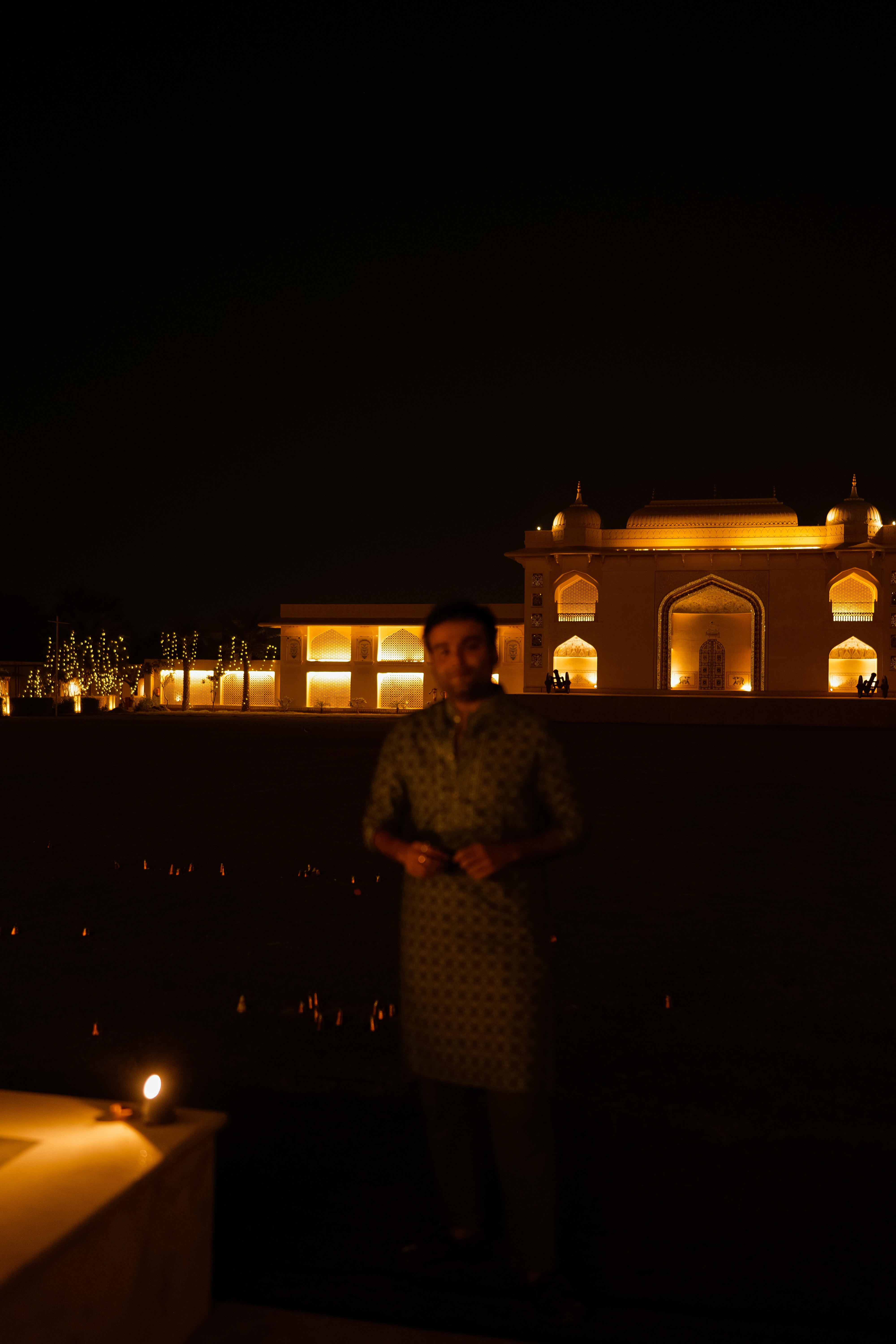
I’m not writing a novel, but that’s exactly how it feels right now: standing at the edge of the mist, sensing something ahead but unable to see its outline (though, knowing it’s Diwali, the mist might simply be leftover smog from the fireworks).
I’ve been stuck on one chapter in particular. There’s a lot to say, but I don’t quite know where to begin, what to leave out, or how many caveats to include. Every sentence seems to carry the weight of potential misreading, so I’ve been putting it off for weeks, knowing deep down that at some point I’ll have to face it.
But if I’m honest, I also know what I need to do. At a writers’ retreat last year, a mentor-friend gave me some great advice: “You need to know who your reader is — you can’t make everyone happy, but you can do your reader justice.” I’ve been thinking about that advice a lot, because the truth is, the fear of saying too much or too little often comes from trying to write for everyone. And the moment you start doing that, you lose the pulse of your own voice and end up diluting everything.
So this week, instead of forcing the words, I’ve been sitting with the larger question that always surfaces when the block sets in: why even write at all?
It’s an old, unanswerable question. Writers have been circling it forever. Some write for recognition, some to understand the world, some — as George Orwell says — do it because they are “driven on by some demon whom [they] can neither resist or understand,” others because writing is the only way they know how to feel. For me, it’s probably a mixture of all those things, but the memory that comes to mind most vividly is of a pirated Jeffrey Archer paperback.
I must have been fourteen, on summer break in Pune. Until then, my world was a mix of Horrible Histories, detective books, Harry Potter, and Indian mythologies. One summer, my father returned from visiting family in Mumbai with a slightly torn copy of Paths of Glory. The cover drew me in and I remember sneaking it from his suitcase and hiding it in my loft bed, reading under a blanket while pretending to sleep. For two days I was lost in that world, relishing it until my eyes ached. When I returned it, pretending I’d never taken it, I was already changed.
Critically speaking, it wasn’t Archer’s best book, but it opened a door, and he became the first author whose backlist I devoured in one go. It led me to Kane and Abel, still one of my favourite books, and introduced me to the likes of Sidney Sheldon, Robert Ludlum, John Grisham; a whole literary universe. The book showed me what it meant to be pulled completely into a story that it changes something in you.
And maybe that’s why I write. To chase that same feeling of immersion and, if I’m lucky, to offer it to someone else. I know it’s audacious even to imagine that because lord knows there are times when even calling myself a writer feels like pretending. So today, even being able to place Jeffrey Archer and myself in the same sentence, however unequally — for I realise comparing myself to him might sound like the literary equivalent of a gully cricketer invoking Virat Kohli — feels like something worth holding on to. Because that, I think, is what every amateur writer deserves: the small, stubborn wins. The moments when your sense of self isn’t working against you but, for once, working with you to the extent that it lets you believe, however briefly, that you belong to this craft you love.
And perhaps it’s only by holding onto these little wins that I’ll one day open the door and look out not just onto Murdoch’s misty landscape, but into clear, sunlit skies.


Very relatable piece! Hope you write your way to clarity soon, Nishad.