

Yesterday, Brown History published an essay of mine titled “I Don’t Know How To Write About India” — and I’m still taking it in. I’ve followed the newsletter and their Instagram page for well over half a decade, and to now see my words and photographs on their platform has felt extraordinary.
In less than 24 hours, I’ve already received an outpouring of kindness — from friends, of course, but more unexpectedly, from strangers. And there’s no greater gift for a (part-time) writer than that. When someone who doesn’t know you reaches out just to say your work moved them … that’s everything.
Longtime readers know I don’t normally do this, but someone recently told me to count my wins. And a few of the messages I received were so heartfelt, I felt compelled to share them here. (And if you’re still on the fence about reading the piece — maybe this will just about convince you.)

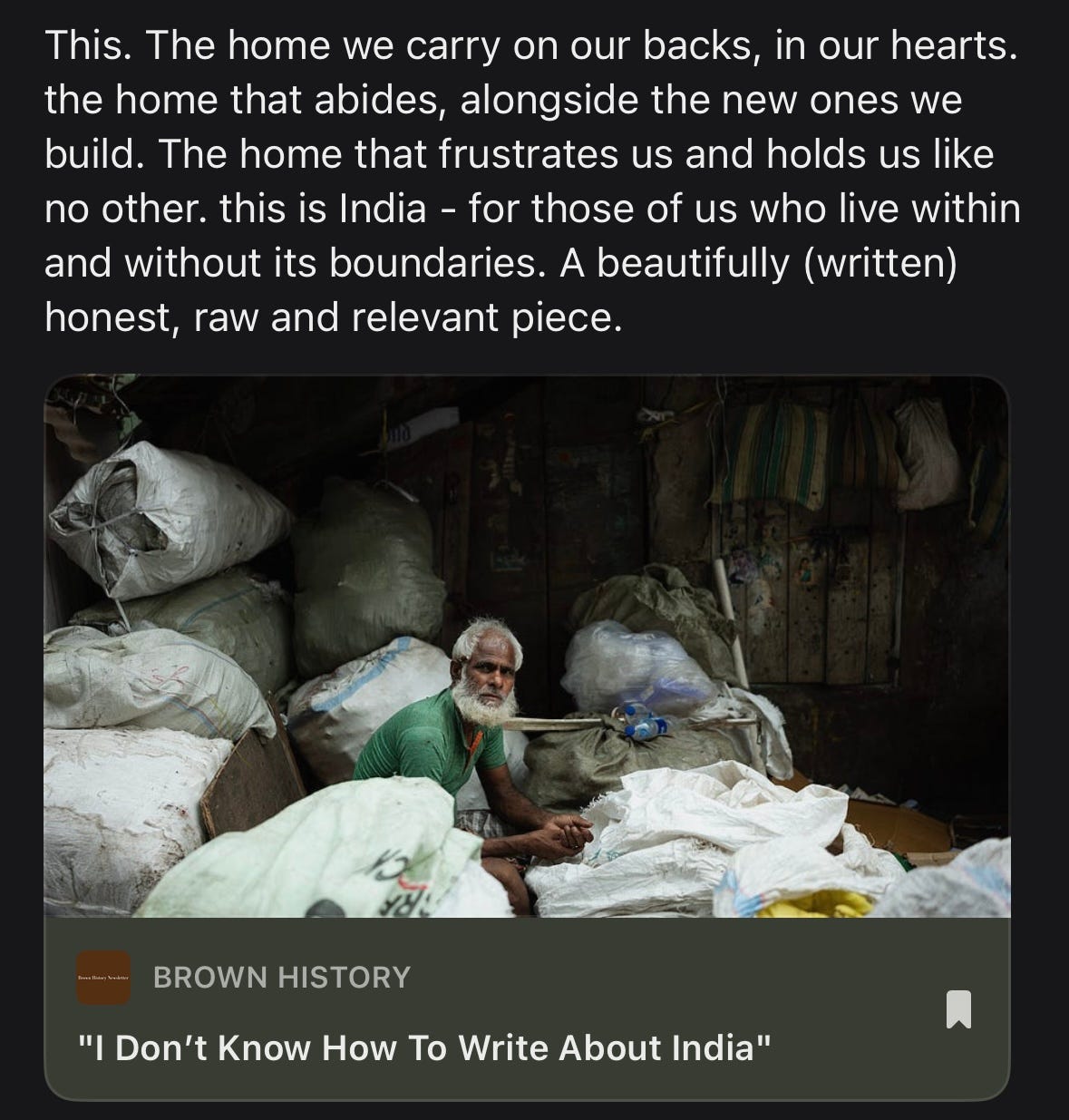
And some like the below,

… which, to be honest, fair enough!
The article is behind a paywall — and I absolutely encourage you to subscribe to Brown History if you have the means. Their work is thoughtful, generous, and consistently brilliant. But I also want this piece to be read, so I’m sharing the full piece in the section below for anyone who is interested.

Thank you for reading. And as always, I’d love to know what you think.
With gratitude,
Nishad
I Don’t Know How To Write About India
When the diaspora returns home
Just before leaving Zero Point in Sikkim — the last outpost of civilisation before the land yields to snowy peaks, military fences, and the Tibetan plateau — I had to relieve myself behind a rock. There were no toilets. Only brittle shrubs, patches of snow, and a wind so sharp it didn’t care whether you were Indian or Chinese. The area was heavily militarised — Indian flags fluttered at absurd altitudes, convoy trucks thundered through narrow routes, and soldiers watched from distant vantage points. I stood there, exposed, glancing nervously over my shoulder, half-wondering if my movements were being clocked from somewhere above. The Republic had built border posts and fences, hoisted emblems and stationed men — but not a single public toilet. And I remember thinking, in that absurd, freezing moment: what is the responsibility of a non-resident Indian writing about India?
The question follows me like a shadow every time I return — and every time I write.
Some say the answer is obvious. Celebrate. Uplift. Be proud. You’ve grown up in the land of Buddha and biryani, of the Vedas and vada pav. You owe your country a curated portrait. Write about the food, the families, the festivals. Write about how far we’ve come despite colonisation, partition, and poverty. Atithi Devo Bhava, Guest is God. Write Incredible !ndia — with an exclamation mark, please.
That’s the India I was raised to love — the one my parents carried with them as we packed our bags and left. “Never forget where you come from,” they’d say. “Be proud.”
But what do I do with the India I actually see?
What do I do with the young beggar who tugged at my shirt as I sat in a rickshaw in Kolkata, saying “please, bhaiya” in a voice that cracked something in me? I ignored him, as I’ve been taught to. I even felt a flicker of pride for not snapping at him like I’ve seen others do. But I still said nothing. Gave nothing. And when he finally muttered “fuck you, bhaiya” and walked off, I didn’t know what stung more — the shame, or the truth of it.
What unsettles me most, thinking back, is how easy it had been — a few years earlier — to pay off a fixer loitering outside the passport office. To slide cash into his hands in a quiet corner of the alley, just to make sure my paperwork went through. That didn’t feel difficult. It felt normal. Bureaucratically justified.
“This is how it works here, don’t you know?” he’d said.
And I nodded, paid, played along — because not doing so would’ve meant admitting I didn’t belong.
This is what I’ve inherited — we have inherited — a moral code shaped by privilege and practice. I’ve seen the casual cruelty of those who call this place home, and the exhausted acceptance of those who don’t have the power to complain. And I see it in myself, in the silences I mistake for dignity. In the resistance to individuals, not the system.
On another day in Kolkata, I signed up for a photography walk — from Potter’s Lane to the flower market to the ghats by the Hooghly River — led by a local photographer who’d been doing this for years. His clients, he told me, were almost always Westerners or expats. People like me. And although I understood the language and the etiquette of the land, I also knew he didn’t quite see me as Indian. At least not fully.
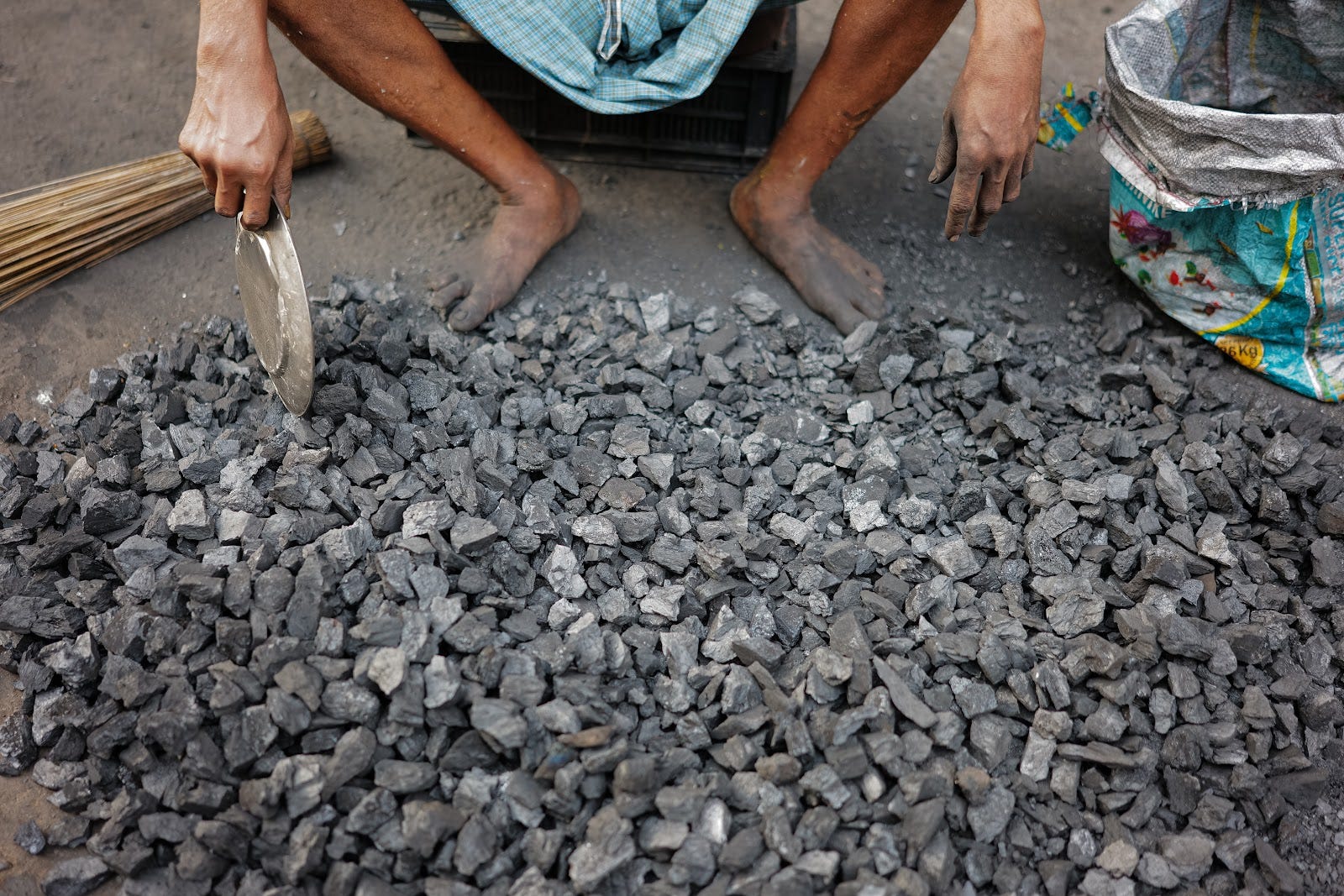
As we passed men bathing in the river, women washing clothes on the steps, snotty children running in circles, he reminded me of a rule he gives foreign clients: “Don’t get too close. These are people, not just subjects.” I nodded. But the line that stayed with me came later, when we turned into a narrow alley and he said, almost automatically, “There’ll be a few beggars ahead. Don’t photograph them.”
I wanted to say “Of course I wouldn’t” — not just out of respect, but, selfishly, because that’s not the image of India I wanted to present. I did photograph street workers, men with tattered clothes and calloused hands. And I still question it. Part of me wonders whether I’ve internalised the Western eye — the one that finds authenticity only in hardship. That finds “real India” in the cracks and dust and poverty, not in the tech parks of Bangalore or the manicured flyovers of Mumbai. The well-lit lives of the middle class don’t have the same cinematic ring as Slumdog Millionaire, after all.
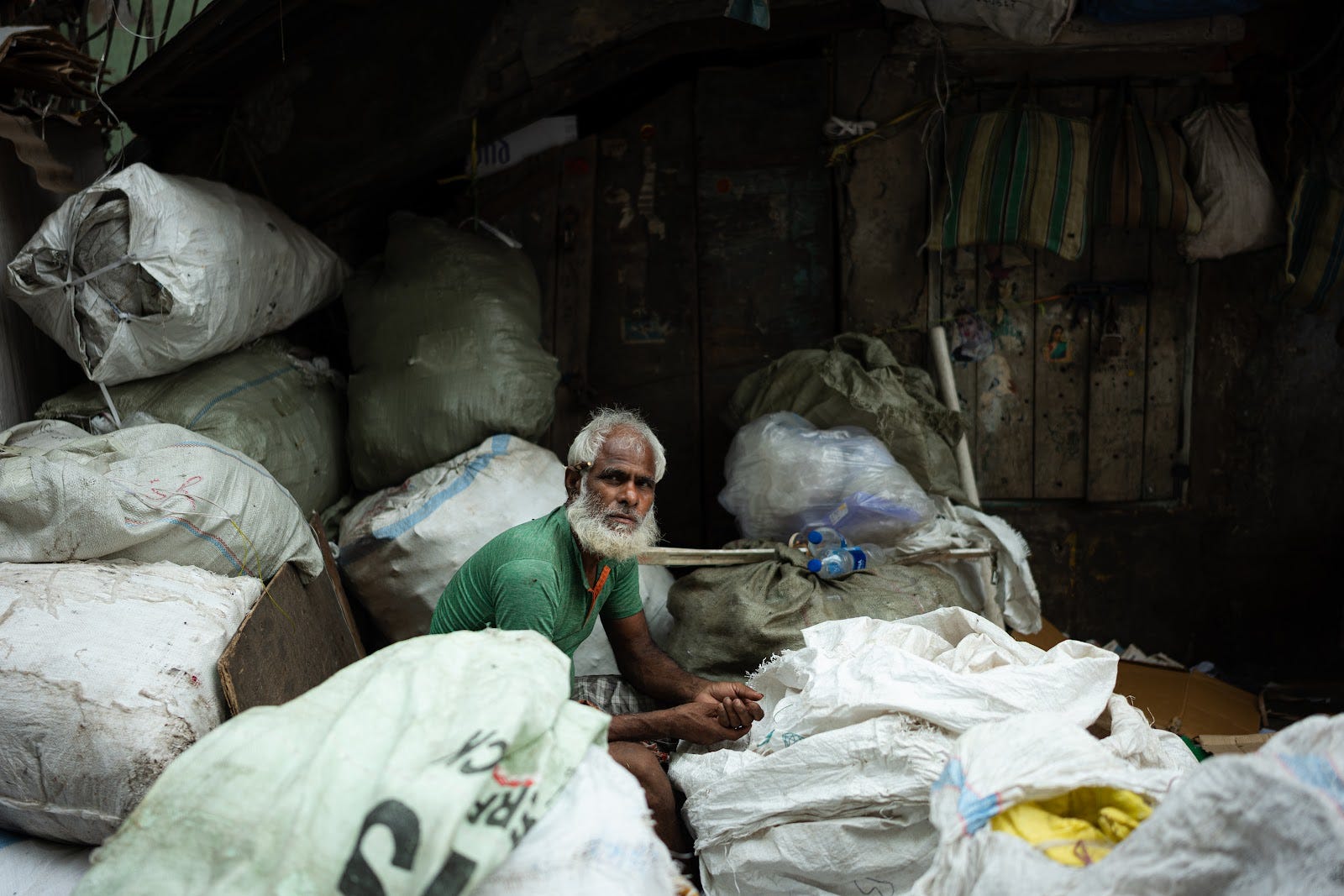
But authenticity, I’ve realised, is also curated. Because even as he tried to protect India from the Western gaze, he shaped it too — staging scenes as if he knew exactly what we were after. We, meaning the Western we. The one I had unwittingly slipped into. A plastic wrapper was nudged out of the frame. A smartphone tucked into a pocket. Branded sneakers shuffled out of shot. A roadside barber with gods on the mirror was charming. The same man with Bluetooth speakers blasting Bollywood? Less so.
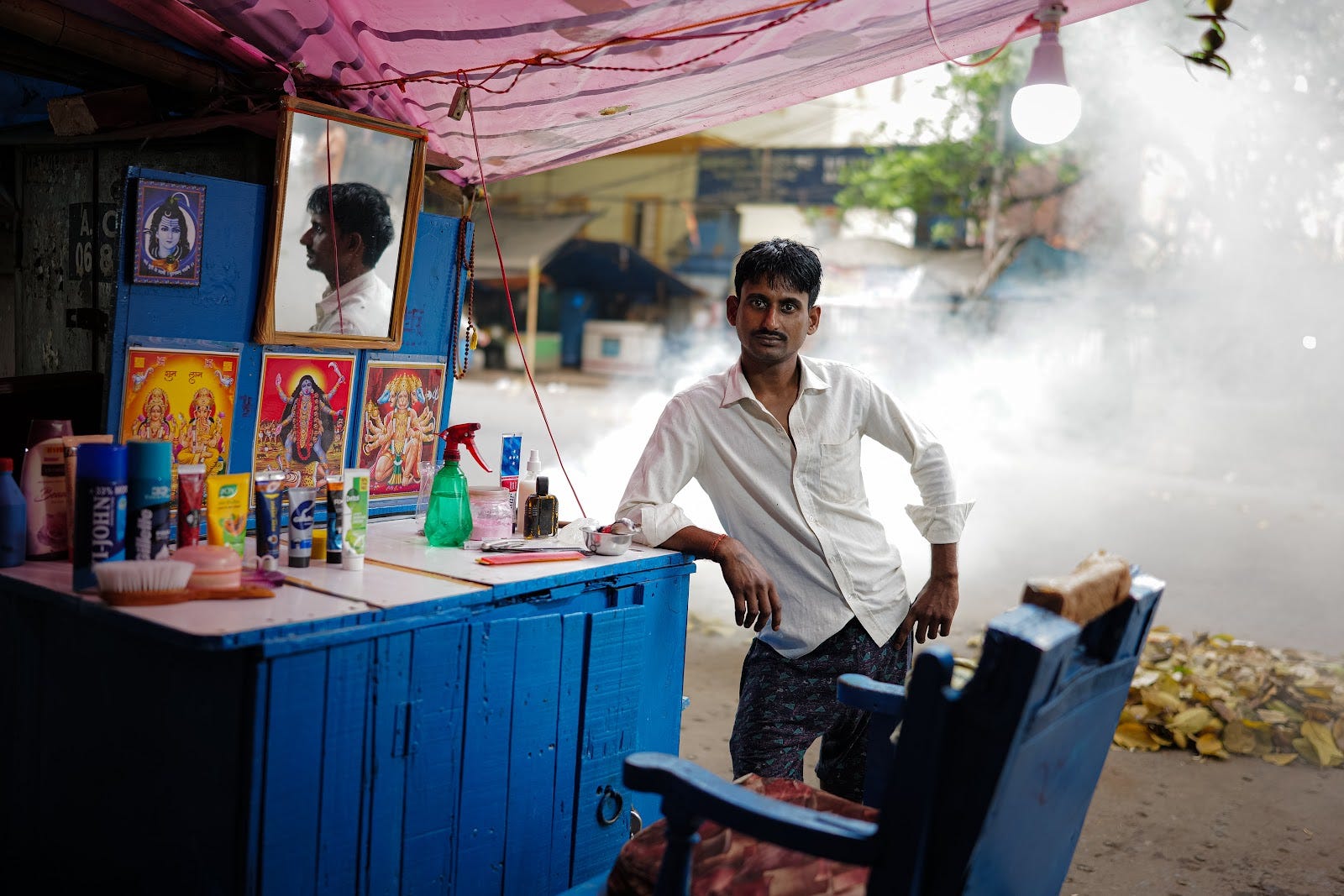
He wasn’t just shielding the country from misrepresentation — he was participating in it. Preserving an idea of India that was rustic, rooted, pre-digital. And what struck me most was how instinctively he did it, even for someone like me. He assumed I wouldn’t want the paradox in the picture. That I, too, had come looking for a version of India already prepped for the lens.
So maybe the answer to that question — of what version of India I’m capturing, and for whom — is this: the real India isn’t always what’s in the frame, but what gets quietly moved just outside of it.
Even in a place where everyone’s life is on display, I hesitate. Not because I fear confrontation, but because I fear misrepresentation. Privacy may be a Western construct, as someone once said to me — and in India, strangers will ask about your salary, your weight, your marriage prospects before they ask your name. But that doesn’t mean everything should be photographed.
And yet, part of me still feels that if I can document something, I should. That if a moment is there to be captured, not doing so is a kind of failure. Maybe that’s the Western part of me — the part that was trained to record before it reflects. To collect evidence, frame the world, archive the experience, even when I don’t fully understand it. Isn’t that what the colonisers did, after all? They documented what they couldn’t interpret, mapped what they couldn’t belong to — as if naming it was the same as knowing it.
In university, we studied terms like “poverty porn” and “extractive gaze,” and so now I wonder: is my discomfort ethical awareness — or just a performance of it? Is it care, or conditioning? A sanitised gaze shaped by the values I inherited both at home and abroad. I’ve been taught to keep things tidy — not just the house, but the narrative.
Because I’ve been in those rooms abroad — from London to New York, Edinburgh to Berlin — where people speak confidently about caste in India while never acknowledging the caste systems they live inside. Their passports slide through borders, their accents open doors, their skin draws no suspicion. Privilege with better branding.
And so I live two lives.
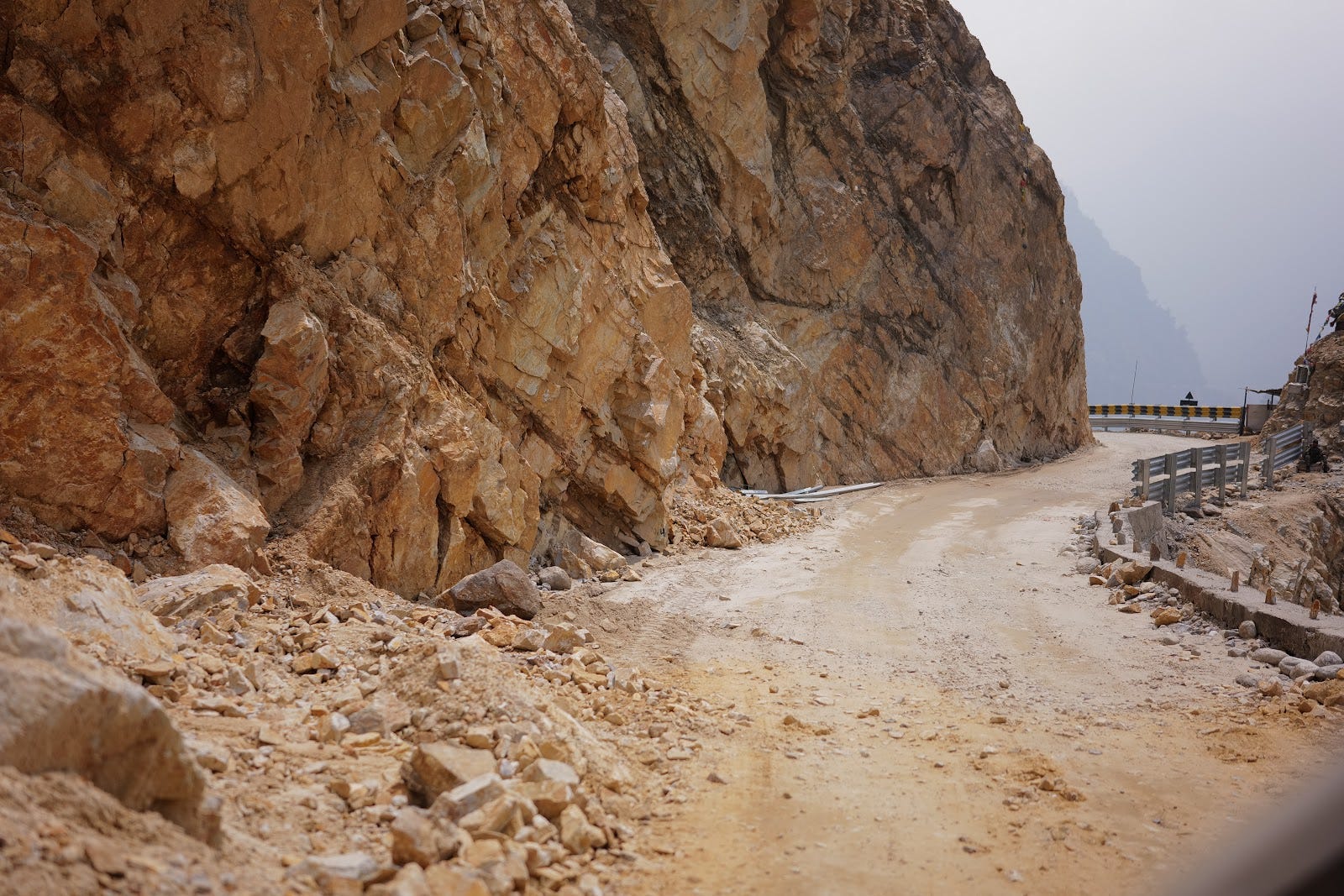
In India, I’m the one reminding everyone that it shouldn’t take a bribe to renew a passport. That roads shouldn’t look like they’ve survived a war. That dignity shouldn’t depend on your surname.
Abroad, I’m the apologist. The contextualiser. I push back against caricature. I defend the chaos. I explain away the pain. I tell people we’re not one story — even when I don’t know how to tell the story myself.
But sometimes, I want to scream.
This isn’t charming. It’s not content. It’s exhausting. It’s watching your parents grow old in a system that doesn’t work. It’s being told to “adjust” like it’s a rite of passage. It’s corruption disguised as culture and contradiction passed off as character.
I was raised in the Middle East — a region where there is no direct path to citizenship. You can live there for decades and still never be seen as belonging. A place where you must always remember who you are and where you came from. And so I did. At home, my parents kept India alive in our daily rituals, our accents, and the soap operas. It was patriotic nostalgia, long before I ever learned to critique it.
In the UK, where I have lived for a little more than a decade, the story is different. Here, you stay, and you eventually become. You inherit a life you get to shape. And that shift — from being constantly othered to being quietly absorbed — brings its own guilt. It makes the distance feel chosen. It makes your criticism of India feel sharper, maybe even unfair. Because you left. Because you stayed away.
That distance shaped not just how I lived, but how I learned. I ended up studying South Asian Studies — not in Delhi, not in Chennai — but at Oxford. It was in the halls of the coloniser that I learned the grammar of the colonised, the vocabulary of the subaltern. I remember walking past portraits of empire, seminar rooms named after men who drew borders in places they’d never seen, and rewrote histories they barely understood. We read old census records, missionary journals, speeches from the Constituent Assembly. We debated caste and secularism.
Some students were there to study India and the subcontinent — the concept, the region, the case study. I was there trying to understand myself.
At first, I felt lucky. Privileged, even. To be in a world-class institution, reading the texts I was supposed to revere. But slowly, unease crept in. There was a strange dissonance in being taught my own inheritance in someone else’s accent. To write essays on Ambedkar, Jinnah, and Nehru in the language of those who once ruled over them. It wasn’t that the place was hostile. It was worse — it was reverent. Neutral. Polished. As though all the heat and heartbreak of the subcontinent had been ironed into footnotes. As if there were an objective lens through which it could all be seen now — packaged, prim, and palatable. Stripped of its rage, it could now be smoothed into scholarship.
And yet, I stayed. I studied. I performed the rituals of academia — essays, seminars, debates — because what else do you do when the only way to make sense of something is through the language that once tried to erase it?
There are days I still wonder what that means. Whether learning about your own history from across an ocean distorts it. Whether I can ever really unlearn the frameworks I’ve been taught to use — the tidy ones, the analytical ones. The ones that translate rage into research questions, paradox into paragraphs. Maybe that’s why I hesitate before I write. Because I know I’m still learning how to name things that I only half-understand. Because I don’t want to flatten what was never meant to be flat.
I was raised in a religious Hindu household, surrounded by the quiet authority of our many gods and goddesses. Each had their day. Each demanded a particular offering, a mantra, a fast. My mother followed them all — lighting lamps with devotion, cooking specific delicacies, observing festivals with the kind of faith that made even the most elaborate rituals seem effortless. My father, meanwhile, was a man of science. Not irreligious, but inquisitive — maybe I’d go so far as to say skeptical, even. He’d entertain questions my mother brushed off, and so growing up, I lived in the space between their beliefs — reverent but uncertain.
And that space has only widened over time. My education taught me to question, to historicise, to unpick meaning. But even now, I find myself moved by the divine as it appears in everyday India — the roadside shrines that bloom overnight with marigolds and incense, the faces of gods painted onto rocks in remote hills, the way a streak of vermilion can turn any object into a portal to something higher. There’s beauty in that — in how the sacred hides in plain sight, in the way faith transforms ordinary things.
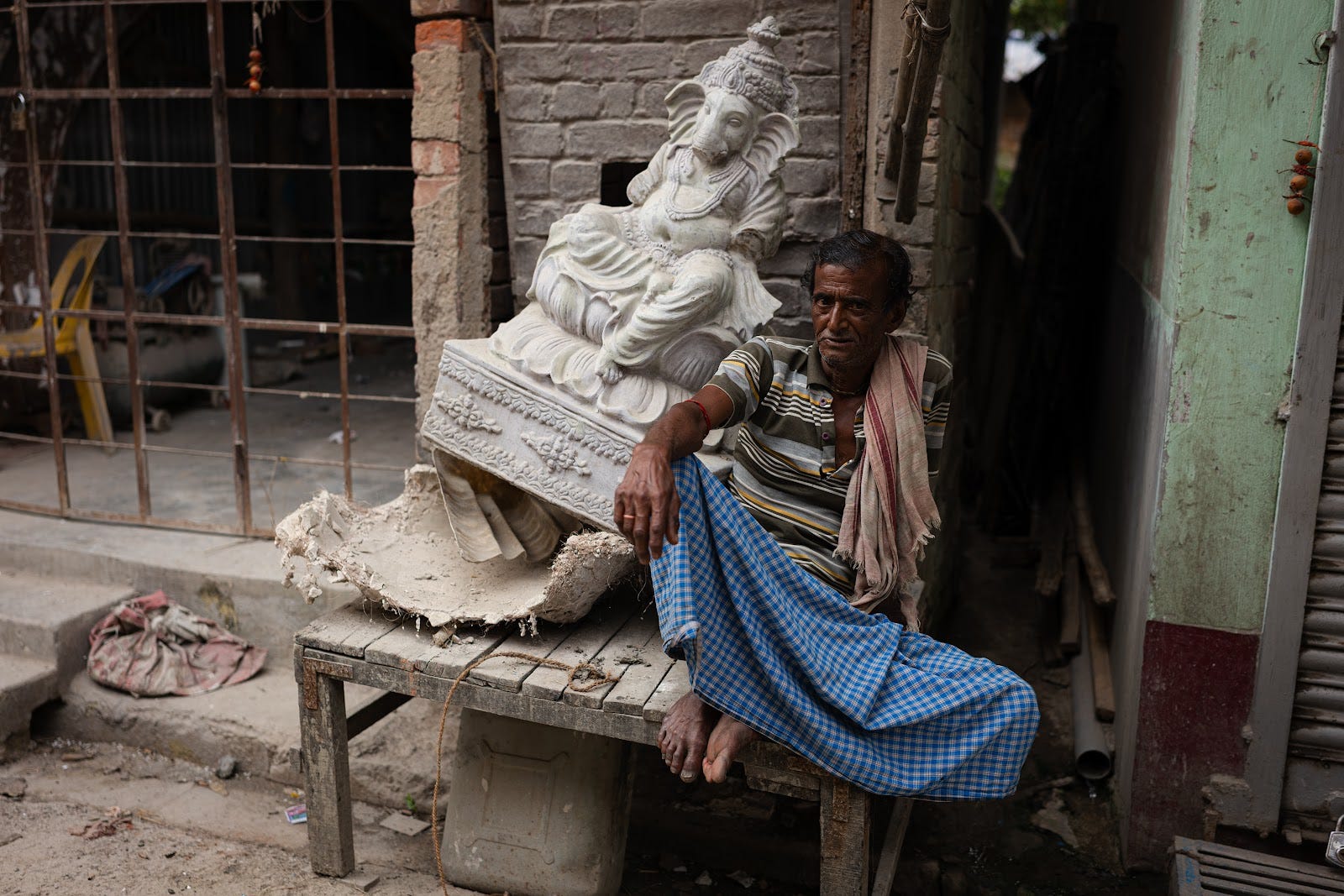
But that beauty is hard to hold, because the same faith that builds temples can also break them. I’ve seen how devotion, when twisted, can lead to violence, to fear, to the silencing of others. I struggle with that contradiction — loving the poetry of belief while flinching at what it can become when pushed to its edge. In a world so certain, where doubt feels endangered, the real conflict is learning to carry both reverence and resistance — sometimes in the same breath.
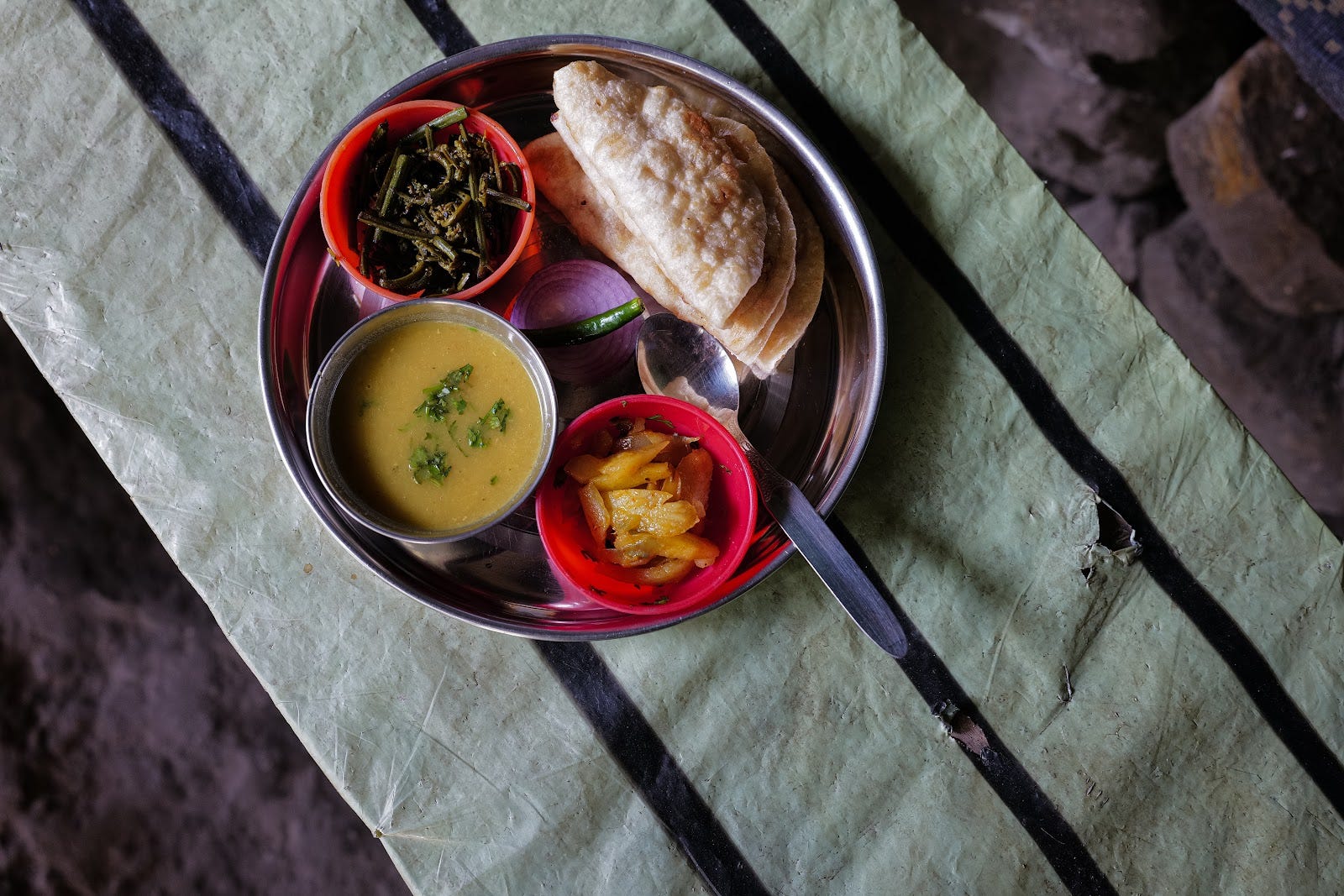
But not everything about this country can be argued or explained. Some moments just land in you — not because they make sense, but because they don’t need to. Like the Nepali family who ran a roadside stall on the road to Pelling and cooked us a hot meal from scratch when my mother sighed, tired of Maggi and momos. They refused our tip. “I’m just glad you liked it,” the mother said, smiling.
Or the elderly Bhutia woman in Lachen who watched over a public toilet behind her home, her purple hat catching the light as she tended to her chickens. When I showed her the photos I’d taken — of the hills, her coop, her smile — she giggled and gasped with delight. Then she sat on a wooden bench, in front of a blanket that had been drying in the sun, and looked directly at me as if to say, “Go on, then.” We didn’t speak a word in common, but we laughed. That was enough.

Or Sonam Lachenpa, the young monk in crimson robes, no older than six. He posed for my camera with his friend Karma, giggling at every shutter click, until he spotted my dad’s phone.
“This one can zoom 100x,” he grinned. “Can you show us the snow?”
There was something magical about it — a child monk, in a centuries-old monastery, summoning the Himalayas not with prayer, but with pinch-and-zoom. Maybe that’s what we often overlook: tradition and technology aren’t opposites here. They sit together, like prayer flags strung across mobile towers.
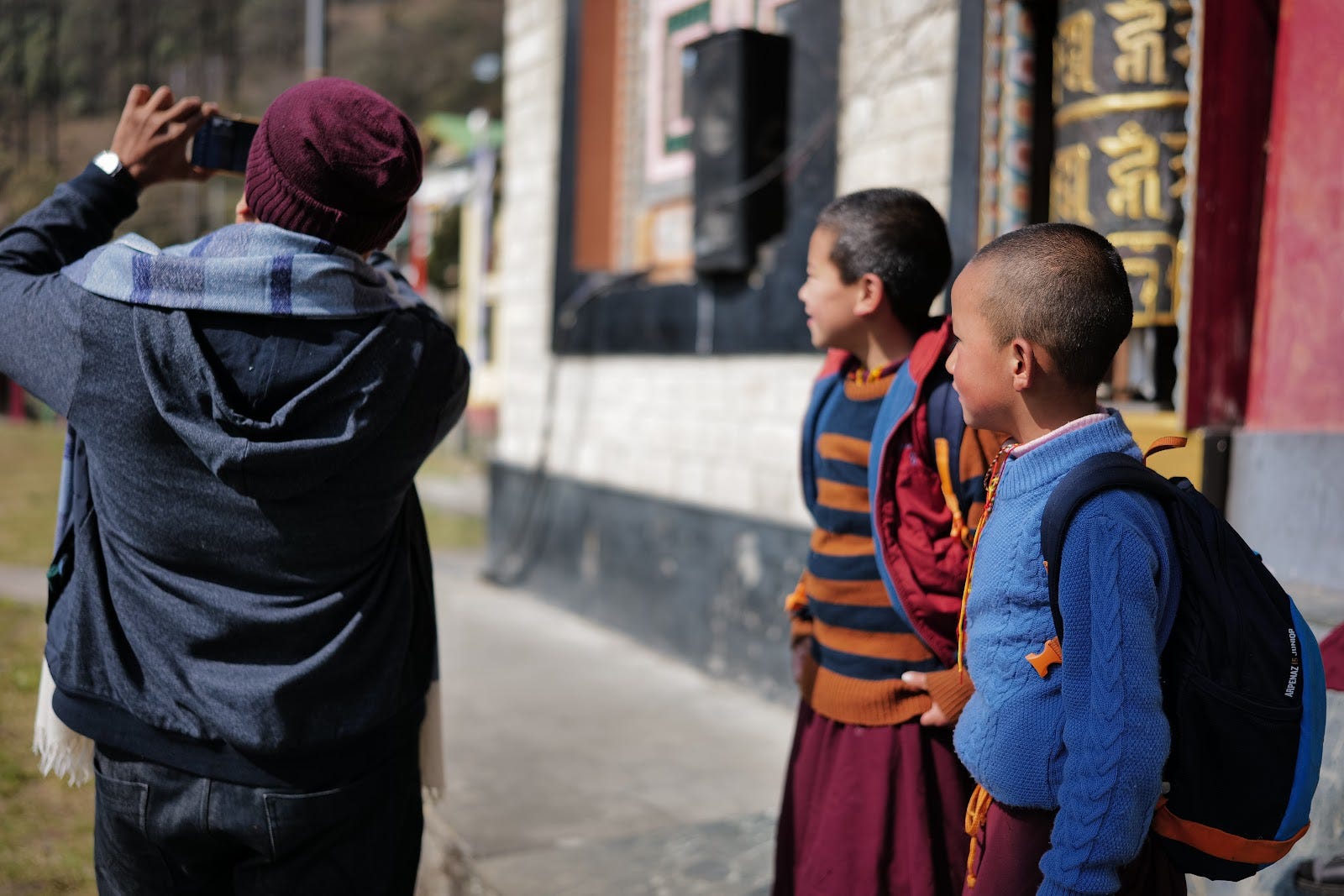
Moments like that stay with me — not because they bring clarity, but because they make the lack of it feel bearable. They remind me that this country doesn’t need to choose between past and present — that it can hold both at once.
I feel that contradiction most on those days in India when I don’t stand out — when no one asks where I’m from. When I speak the language, know the rhythm, blend into the blur. When I move through the country not as a visitor or a witness, but simply as someone who belongs.
And in those moments, something settles. A steady kind of belonging — like slipping into a coat you haven’t worn in years but still fits.
And maybe that’s what I’ve been circling around all along — learning how to write about a place that lives in you, even when you no longer live in it.
And that’s why I keep returning to the question: what is the responsibility of a non-resident Indian?
To be honest? To be loyal? To be proud?
Maybe it’s to admit that I don’t know. That I’m still learning how to write about a place without reducing it. That I carry guilt not just for what I say, but for what I choose not to show. That I’ve seen both Indias — the one that breaks your heart, and the one that feeds your soul — and I still don’t know how to write about one without betraying the other.
And so I write. Hesitantly. Guiltily. Knowing full well that between the beggar’s “fuck you” and the fixer’s “just pay,” I have no moral high ground — only the uncomfortable privilege of a blank page.
So so good Nishad.
Congratulations on your first troll! 😂