I would still write, but I’d be bitter about it
In defence of beauty, ornament, and the uneasy business of admitting you want to be read
This weekend I completed another revolution around the sun and unlike last year, when I did that now slightly embarrassing 30 things I learned before 30 list, I don’t feel particularly inclined to measure or summarise this one. Perhaps that’s part of growing older, realising that birthdays are less milestones of achievement and more checkpoints for introspection; moments where you pause to notice who you’ve become.
This year, while I’ve taken one of the — if not the — biggest leaps of my life, I’ve been thinking most about a question that Elif Shafak recently posed: Would you still write if no one read your work? She says there are two answers to that: the admirable one, and the honest one. The admirable one says yes, of course, art is its own reward. The honest one admits that no, probably not, or at least not with the same kind of joy. And I think that’s true for me too. I would still write, because, for most of my life, I did write without readers — in journals, in scrapbooks, the Notes app, in letters and postcards I never sent or sent to myself1 — but I suspect I would write differently; I would write more bitterly, more restlessly. Because as George Orwell said, “all writers are vain,” driven “by the same instinct that makes a baby squall for attention” and there’s a strange kind of honesty in accepting the truth in that. Clearly not much has changed between toddler me and the me after over three decades on this pale blue dot we call home.
This vanity is one of belief, though: the belief that your words should mean something to someone. That they might resonate, or linger, or at least be seen. The same impulse that makes a dancer step on stage, or a singer lift her voice, or an artist light a canvas in full bloom. Creation is, at its core, an act of communication, and however much we romanticise solitude, the truth is that we all long for an audience, however small.
What’s odd, though, is that it’s so much easier to admit ambition in the corporate world than in the creative one. A managing partner at a top consultancy can stand at the World Economic Forum and declare that his firm is solving global challenges, and the world applauds. Confidence, in that context, is professionalism. But let a novelist or poet speak of their work with conviction — even if they’ve won a Booker or a Nobel or a Sahitya Akademi — and suddenly the air thickens with accusations of arrogance.
There’s a fine line here, of course. Arrogance is unattractive in any field — art or business — but confidence is necessary. The difference, I think, is that in a world that has slowly devalued the arts, confidence in art is often mistaken for arrogance. If you say AI can solve cancer, as OpenAI’s Sam Altman recently did, or claim you want to build nuclear reactors on the moon, as NASA has said it wants to do, the world applauds your ambition. But if you say you can write a sentence that might make someone feel less alone, or make music that will make another see the world differently, it suddenly sounds self-important. It’s not that artists have grown humbler; it’s that the measure of what counts as “impact” has changed.
Maybe that discomfort stems from the duality I’ve lived for years — the corporate and the creative constantly bleeding into each other like two incompatible shades of ink on the same page. One vocation forces me to distil the sum total of my business knowledge into three bullet points; the other wants me to surf and soar through sentences and pages. In one world, it’s easy to speak of success in metrics and outcomes; in the other, you hesitate before even calling yourself a writer, as though claiming it were a form of hubris. It’s strange how saying “I’m good at what I do, and you should listen to me” in a boardroom feels natural, but saying “I wrote something I’m proud of, and people connected with it” feels like you’ve confessed a sin.
I see it all the time with writer and artist friends — immensely talented people who hedge or overexplain or pre-empt criticism before anyone has even spoken. They downplay their achievements, make jokes about their process, apologise for their own seriousness, hide behind the label of an ‘aspiring’ this or a ‘wannabe’ that. It’s as if humility has become the default register for the arts, while confidence has been recoded as conceit. We tell ourselves humility is a virtue — which it is — but there’s a difference between modesty and self-erasure, between being gracious about your work and being made to feel that your work doesn’t matter.
Somewhere along the way, the arts lost their place in the hierarchy of what is seen as essential. Travelling across India, I’ve often been struck by how deeply that wasn’t always the case. The rock-cut Buddhas at Kanheri Caves in Mumbai, the faded vegetable-dye murals of Amber Fort in Jaipur, the carved brackets and miniature paintings that adorned even the most functional of buildings — these weren’t indulgences; they were integral to how society expressed beauty, faith, and order. Art was not an accessory to life but a reflection of it. Today, much of that impulse feels almost anachronistic. Ornament is dismissed as distraction; beauty for its own sake, as frivolity.
I recently read a piece which claimed that many writers “fear being branded with the scarlet letter of arrogance” when they admit that their work matters. And it’s true — because somewhere along the way, the arts stopped being seen as essential, and artists began to internalise that suspicion. They are asked to justify their existence in a language of usefulness that was never meant for them.
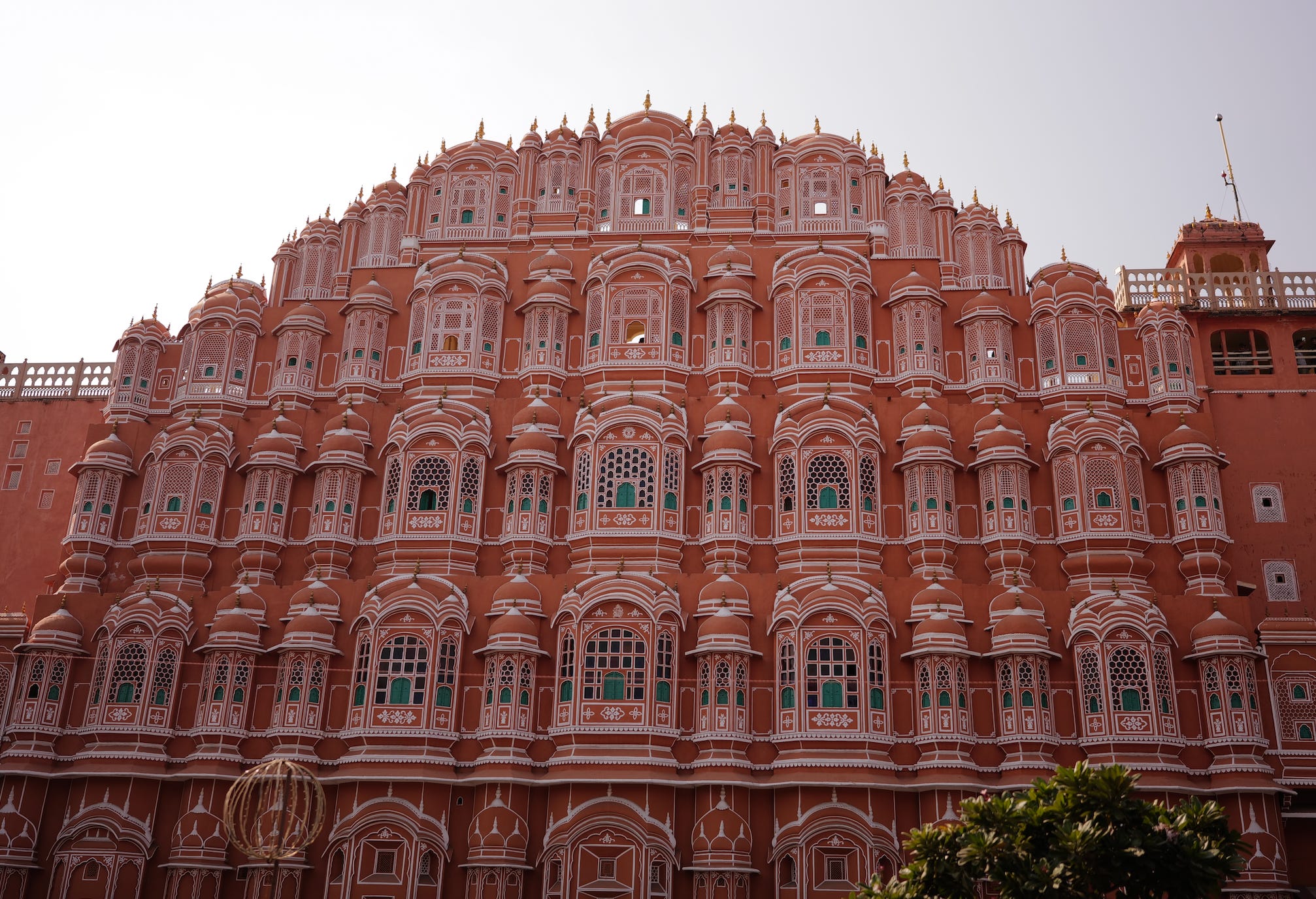
I remember once, while writing a speech for a CEO client, a colleague asked me to remove what she called the “superfluous” lines: the flourishes, the metaphors, the parts I had included for rhythm rather than reason. I did, and I understood why; in business, brevity matters. But that sort of thinking cannot, and should not, be translated into the arts. I don’t want to, and shouldn’t have to, justify why I’ve taken five paragraphs to explain something that could easily be said in one. That’s the point. The work of art lies in elaboration, in excess, in ornamentation. It’s the literary equivalent of a Rajasthani haveli: carved, filigreed, painted, built to breathe and shimmer, not a Soviet Khrushchyovka built only to endure. The former was made to delight; the latter, merely to function.
Perhaps that’s why confidence in art feels threatening: it reminds the world that imagination, too, is a kind of labour.
We’ve iPhone-ised our culture — making everything smooth, efficient, backlit; ensuring it is modular, intuitive, swipable. Why have we let a design principle masquerade as a philosophy of life? A plain screen might be ideal for a calling device, but I don’t want that to be the template for the rest of my days. I don’t want a life that runs only on battery power and minimalism. I want ornament. I want sentences that refuse to sit still, that stretch their legs and shake their anklets; words that dip their toes in metaphor and whirl back into irony. I want commas that arrive too often and linger too long, adjectives that clutter next to one another, extra vowels that add colour just because they can — and em dashes that aren’t exiled simply because the online grammar police didn’t pay attention in English class. I want beauty, I want excess. I want frivolity for the sake of frivolity, because what else are we, if not creatures of embellishment? The world, after all, was once carved in stone and sung in raga. We are the inheritors of elaborate epics, of Gilgamesh and Mahabharata, of the Odyssey and the Shastras and the Sutras. Once, humanity built cathedrals to its imagination; now we pare everything down to bullet points and “hot takes.” We have perfected the art of saying less and feeling nothing. And that, to me, is the real ChatGPT-ification of writing — not the presence of a machine, but the absence of joy.
And yet, I keep coming back to Shafak’s question: Would I still write if no one read my work?
Kafka, after all, wrote to his friend Max Brod in 1922 that “a non-writing writer is a monster courting insanity.” I think often of that line and of all the words that build up inside us like silt behind a dam, unsaid and unspilled, until they find some way of breaking through. Maybe that’s why people talk to themselves when they’re alone; maybe that’s why prisoners in solitary confinement carve words into the walls. Yes, some write in the hope their words would one day be read — take Jawaharlal Nehru’s magnum opus, The Discovery of India, written while he was imprisoned at Ahmednagar Fort or Vinayak Damodar Savarkar’s etchings with thorn and nails in Andaman’s cellular jail under the British Raj — but many others write knowing their words might never see the light of day. They write to stay sane.
That doesn’t make them more writers than those who write to be read. Every writer knows that what finally reaches readers is merely the tip of the iceberg: beneath it lie the countless drafts, the deleted paragraphs, the fragments too raw or too honest to be made public. Even those of us who often write about our private lives — to the shock and horror of our loved ones — have pages upon pages that remain unseen, self-censored, or simply unreadable even to ourselves.
When I read Alexandre Dumas’ The Count of Monte Cristo as a child, what haunted me most was not the betrayal or even the imprisonment, but the long years of isolation — the old priest in his cell, scribbling notes and drawing maps on scraps of paper, passing fragments of thought through the walls. There was something profoundly human about that; the instinct to reach out, to leave behind a mark, even when there is no promise of it being found.
And so, no, I’m not claiming virtue by saying I would still write the way I do without readers. I’m saying that I write because there are readers … because you exist on the other side of the page (read: screen), and by doing so, you save me from the madness of speaking only to myself.
So as I turn a year older, I just want to say: thank you for indulging in my excesses and my frivolities. Thank you for receiving my words.
It’s one of the things I love doing — sending myself postcards from places I’ve been; tiny physical notes to self, which I like to think make the postman smile a little when they sneak a peek (which, if I were them, I 100% would do).


This piece has all my heart.
Fabulous piece. Loved it to bits.