I was stopped by India's last Naxals. They were kids with a bamboo pole
India just officially declared victory over a 60-year Maoist insurgency. Here's what that looks like on the ground
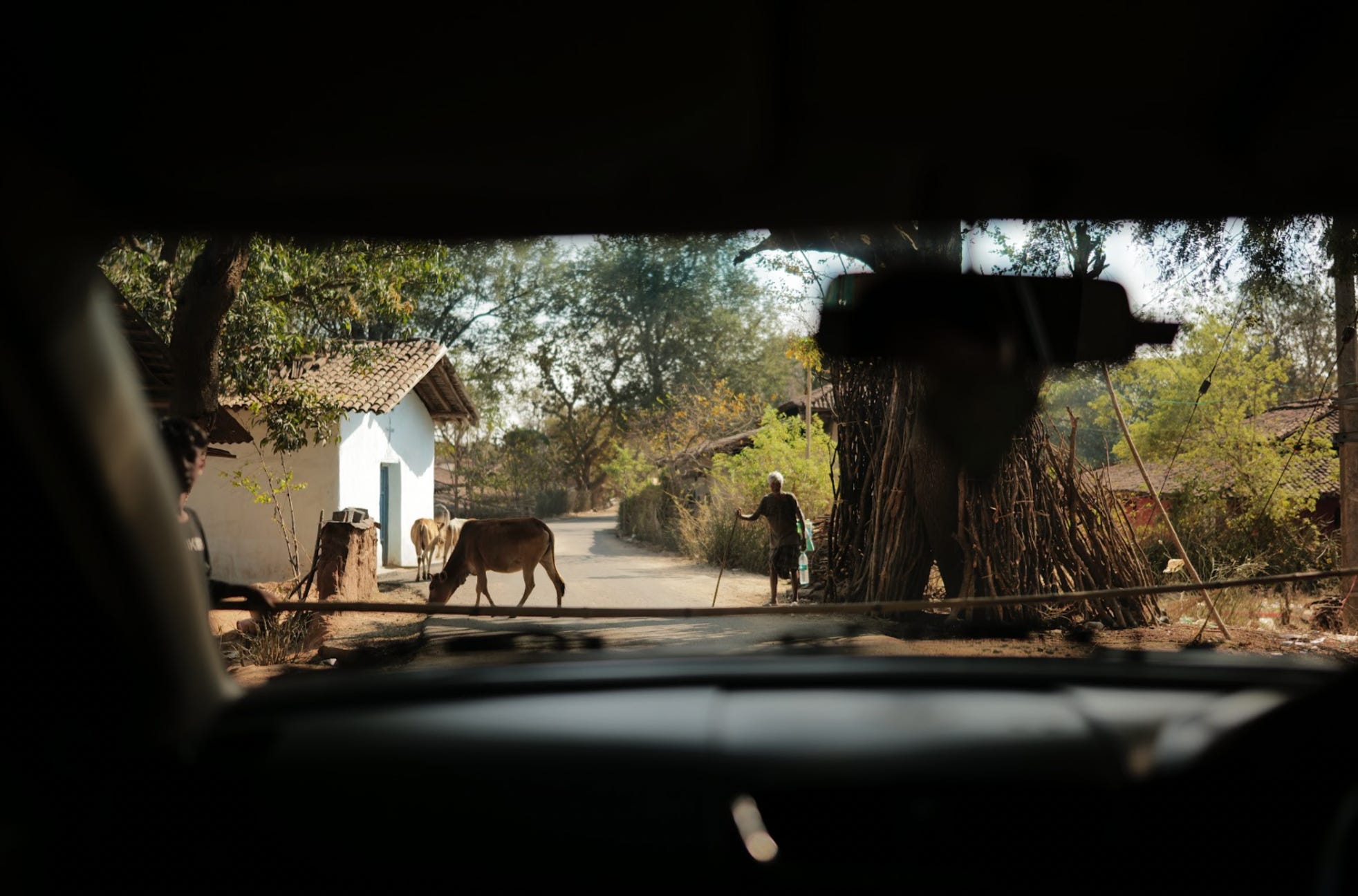
On my way to Dassam Falls last month, a natural waterfall at one edge of the Ranchi plateau in Jharkhand, the car slowed as we entered Taimara village. I perked up to see what was causing the fuss and there it was: a bamboo pole across the road. Two children, neither older than ten, held it in place like an official barricade. One of them demanded ₹10 ($0.11) to let us pass. “Pay or we’ll hit the windows,” he said dramatically.
“Is this because of Holi?,” I asked my driver, knowing the festival was approaching and sometimes came with roadside pranks in this part of the country. He laughed. “They are Naxalites,” he said; Maoists who had spent six decades waging a guerrilla war across India’s tribal heartland. Apparently they still had uses for a bamboo pole and a gang of kids. “Thank god it’s not late at night,” he added.
I handed over the money. A few hundred meters down, the pattern repeated and I was ₹20 ($0.22) poorer by the time we proceeded.
I had been in Ranchi for a week by then. On another drive toward Latehar district and into Betla National Park at the edge of Palamau Tiger Reserve, my driver mentioned that this road — once in the heart of what India called the Red Corridor — is still quiet after dark. Vehicles don’t pass through, and even the shops close early. He said it matter-of-factly; it was midday and we were fine. But the habit of caution had clearly outlasted whatever made it necessary.
That’s roughly where Jharkhand is right now. The danger, as most people I met in Ranchi told me, is mostly past tense. Latehar was still on the government’s list of districts affected by Left Wing Extremism (LWE) as recently as mid-2025. By the time I was there, it had been delisted; Jharkhand’s only remaining listed district is now West Singhbhum, further south. The reflexes, as I noticed though, hadn’t caught up yet.
On March 30, in a nearly 90-minute address to the Lok Sabha, Home Minister Amit Shah declared India “Naxal-free” — one day before the government’s self-imposed deadline expired. “With full confidence, we can say that Naxalism has been eradicated from the country,” he told the House. The claim is contested: critics noted that West Singhbhum and Bijapur in Chhattisgarh remain officially designated as affected, and two senior Maoist commanders have publicly pledged to fight on. But the broad direction isn’t seriously in dispute. Travelling through this part of the country earlier this year, what Shah described didn’t feel like bureaucratic optimism. It felt very close, if not complete.
The numbers bear this out. Violent incidents fell 88 percent between 2010 and 2025, and deaths of civilians and security forces over the same period dropped from over a thousand to around a hundred. The affected districts, once 126 at the insurgency’s peak, are now eight. The state came back to districts that were effectively ungoverned, building roads into previously inaccessible forest, opening bank branches, getting welfare schemes to areas that had seen almost no administrative reach.
Tourism has also picked up at Betla in ways that wouldn’t have been imaginable when the Maoists were at their peak. Everyone I spoke to in and around Palamau said some version of the same thing. Relief that people weren’t scared to travel here anymore and that those coming through brought investment with them.
Whatever the grievances that originally fuelled the movement, the Maoist insurgency ultimately imposed enormous costs on the communities it claimed to represent. There have been numerous instances of burnt schools, killed elected officials, extortion rackets running on the rural poor, attacks on the infrastructure that the poorest communities needed most. The movement caused enormous suffering and set Jharkhand back by generations. Its defeat is good news.
But the end of a security crisis is rarely the end of the story.
One of India’s original Project Tiger reserves, declared in 1973, Betla is old forest. Thick sal and bamboo, hills that rise gently from the plains, light in the afternoon that feels like it belongs to a different century. A forest ranger took me around the villages at the reserve’s edge, mostly Bhuiyan — the name itself means children of the soil — and Chero, a warrior tribe indigenous to the region. He talked about how these communities see themselves as the original custodians of the land. Certain groves are maintained not through fencing or signage but through collective restraint, passed down across generations. Across the Chhotanagpur plateau, sarna sthals — the sacred groves of those who follow the Sarna faith — have been doing a form of conservation work since long before the Forest Rights Act existed.
I’m not raising this to romanticise it. I’m raising it because it says something about what peace here actually has to look like. These communities aren’t simply beneficiaries of development or conservation policy — they’re part of the landscape in a more fundamental sense. Laws like PESA and the Forest Rights Act were written to recognise exactly this: to give village assemblies real authority over their own land, to formalise what communities already know about the forests they live inside. The implementation record of both is, generously speaking, incomplete. In neighbouring Bastar, where roads and ambulances have now reached villages that once had neither, there is a new anxiety taking shape alongside the genuine gratitude — that land acquisition and unchecked mining might follow the security improvements. Fixing that isn’t a sideshow to consolidating peace in Jharkhand. It’s fairly central to it.
The question of what happens after the security problem is solved is not unique to central India. Last year I was in Ladakh, about a week before the Sixth Schedule protests intensified. What I remember from those conversations was a disillusionment that even those who had welcomed the constitutional changes of 2019 struggled to put into words. Back then they had wanted more state attention and investment after decades of being an afterthought. Some of that had come. And still the mood had curdled against the feeling that decisions about their future were being made somewhere else.
Jharkhand isn’t Ladakh; the comparison only stretches so far. But the pattern matters. Communities that feel heard at one moment can feel managed at the next.
India has now done something that would have seemed impossible twenty years ago: defeated what was once called the country’s gravest internal security threat. That took sustained effort, serious strategy, and years of difficult work in terrain that didn’t make anything easy. It deserves to be acknowledged.
The question is what happens now, while the goodwill is real and the relief is fresh. PESA and the Forest Rights Act enforced as intended, not treated as aspirations on paper. Development that is negotiated rather than imposed. Gram sabhas with genuine authority over decisions that affect them. None of this is quick, and none of it generates the kind of headline you can put in a press release. But it’s what the situation requires.
At Dassam Falls, when I’d finished taking pictures of the water gushing down, I noticed a group of CRPF jawans making their way down the steep steps to the bottom to join a couple of others already there. Their guns were laid on the rocks beside them and someone was showing the group something on a phone. They all burst into laughter. Off-duty for an afternoon, there was nothing left to watch in these parts of the Chhotanagpur. India has earned the right to feel good about what’s been achieved here. But it should also feel the urgency of what’s still to do.


