
Can Britain govern itself?
The country that once lectured much of the world on parliamentary democracy now struggles to keep a Prime Minister in office

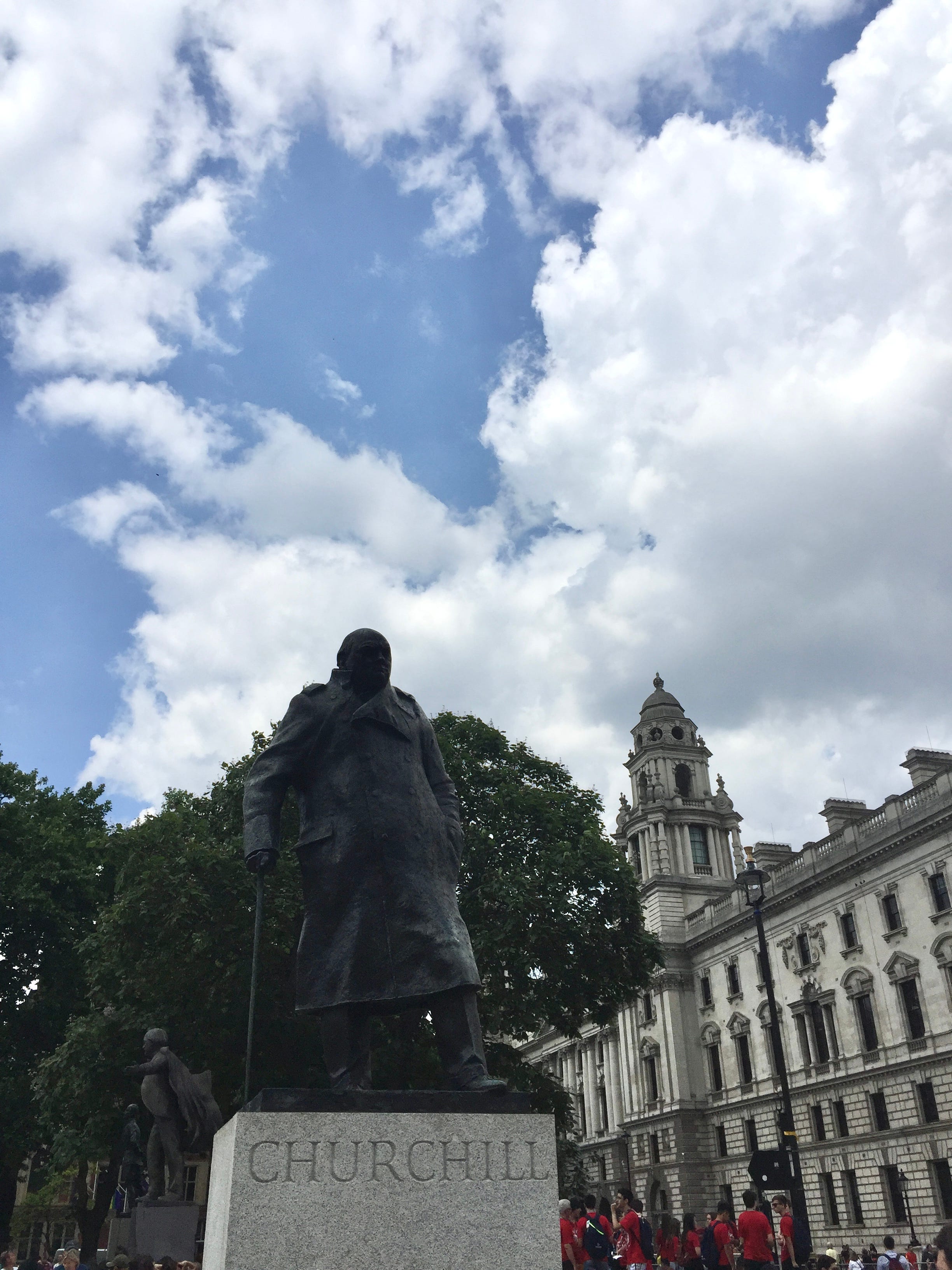
In 1931, as Britain debated whether Indians were ready to rule themselves, Winston Churchill warned that if British authority in India was weakened, the country would fall back into “the barbarism and privations of the Middle Ages.” Less than a century later, it is Britain that has to ask whether it can still govern itself.
Keir Starmer has resigned as Prime Minister less than two years after leading Labour to a landslide victory. If Andy Burnham, the former Greater Manchester mayor and current frontrunner, succeeds him, as is widely expected, the UK will have had seven prime ministers since the Brexit referendum of 2016. For a country that once exported constitutional advice to much of the world with the smug certainty of civilisational entitlement, this is an impressive turnover rate.
There is, of course, nothing unconstitutional about this. Britain, like India, does not directly elect prime ministers. It elects MPs. The person who can command a majority in the House of Commons governs. If a party changes its leader midway through a parliament, the new leader can become prime minister without a general election. This is not a bug in the Westminster system; it is the system.
But politics is not simply about rules. It is also about consent and trust.
When British voters went to the polls in 2024, they voted for Labour under Keir Starmer. They voted on a centrist manifesto fronted by him and a promise of stability after years of Conservative chaos. Andy Burnham was not even an MP at that election. His route back to Westminster ran through a by-election in Makerfield, after a backbencher stepped down and opened the way for him to return to the House of Commons. And that is how a country of nearly 70 million people may soon be led by a man whose immediate path to Downing Street ran through a constituency with an electorate of just 77,462 in one corner of Greater Manchester.
The real issue is structural. Britain is not changing prime ministers because voters keep changing their minds in general elections. It is changing prime ministers because parties keep panicking. Since Brexit, British politics has been stuck in a cycle of revolt, replacement and disappointment. David Cameron resigned because he lost the referendum; Theresa May resigned because she could not deliver Brexit; Boris Johnson delivered Brexit, albeit chaotically, but was consumed by scandal; Liz Truss could not outlast many free trials I’ve signed up to; Rishi Sunak was more popular here as India’s son-in-law than he ever was in the UK. And Starmer promised competence, only to be pushed out by his own party.
The role of Brexit in modern British politics cannot be overstated. It consumed years of governing time and divided parties internally. It also failed to answer the deeper questions beneath the referendum: low growth, regional inequality, struggling public services, rising welfare costs, migration anxiety and a public that no longer believes tomorrow will necessarily be better than today.
The result is a political culture that is more fragmented, more impatient and more personality-centred than before. Leaders are treated less like national figures entrusted with a term and more like chief executives whose contracts can be terminated after a bad quarter. Politics has begun to resemble a show where, if the first few episodes disappoint, viewers demand a new season with a new cast.
That is what Britain is now demonstrating: not the failure of law, but the danger of permanent churn.
Governments need time to govern. Serious problems cannot be solved in the lifespan of a leadership crisis. Infrastructure, welfare reform, healthcare, education, industrial policy, climate adaptation — these require patience. They require leaders who can make mistakes, correct them, take responsibility and still continue long enough for policy to have consequences. If every setback becomes a reason to change the prime minister, politics becomes theatre without administration.
India’s own democratic history offers a useful counterpoint. Since independence, it has known long periods of political continuity, first under Congress and, more recently, under the BJP. That continuity can, at times, be stabilising. It can allow governments to think beyond the next news cycle and pursue long-term projects. A country as large and argumentative as India cannot be governed through permanent crisis management alone.
But continuity has its own dangers too. If power lasts too long, it can begin to confuse electoral success with permanent entitlement. Institutions can weaken, opposition can become hollowed out, and criticism can be treated as disloyalty. Healthy democracies need neither permanent rule nor permanent churn. They need the possibility of change, but also the patience to let governments govern.
For generations, Britain was held up in India as the model of political maturity. India, by contrast, was supposed to be noisy, chaotic, emotional and perpetually unstable. And yet, over the past decade, India has had political continuity while Britain has become a revolving door.
This does not mean India’s democracy is beyond strain. It means stability and instability are both capable of disguising deeper problems. One can hide excessive concentration, while the other can hide political exhaustion. The question is not how often a democracy changes leaders, but whether it has enough trust, institutional resilience and public patience to govern seriously between elections.
The old imperial question, then, was always misdirected. Churchill worried that India would collapse without Britain. Instead, the republic that emerged after him has, for all its flaws, held together through elections of almost unimaginable scale.
The more awkward question now is whether Britain, stripped of empire, can govern itself without collapsing into another leadership contest.